There you are, wandering through the lush landscapes of Australia. Spotting a bench ahead, you imagine how lovely it would be to rest your weary limbs … only to find it occupied by a rather curious creature. Shaggy white coat, spindly legs, long black bill. It cocks its head at you, equal parts menace and mischief.
A quick flip through your bird guide reveals the culprit: the Australian Ibis — one of the many quirky (and hopefully friendly) characters you’ll meet here.
From the curious bin chicken to the regal pelican, Australia’s birds are as varied as its landscapes. With over 700 species calling Australia home, you’re never far from a feathered surprise. Today, let’s meet six locals you’re likely to encounter on your own wanderings.
1. Australian Pelican
On the Gold Coast of Australia, people surf, stroll, and sunbathe along the beach, soaking in the glorious sunshine. As you take in the scene, a rather curious creature floats into view. You gasp — that brilliant black‑and‑white plumage, the bulbous throat pouch, the sheer size of it. A giant among birds.
Who else could it be but the Australian Pelican?
This elegant connoisseur of fish is often found gliding along wetlands and waterways, using its delicately built bill to snatch a snack from the sea. And sometimes, when the moment calls for it, it even uses its handy throat pouch like a fishing net. Convenient, indeed.
Here’s a quick, slightly blurry phone shot, but the size comparison still makes me smile — the pelican completely dwarfs the seagull beside it.
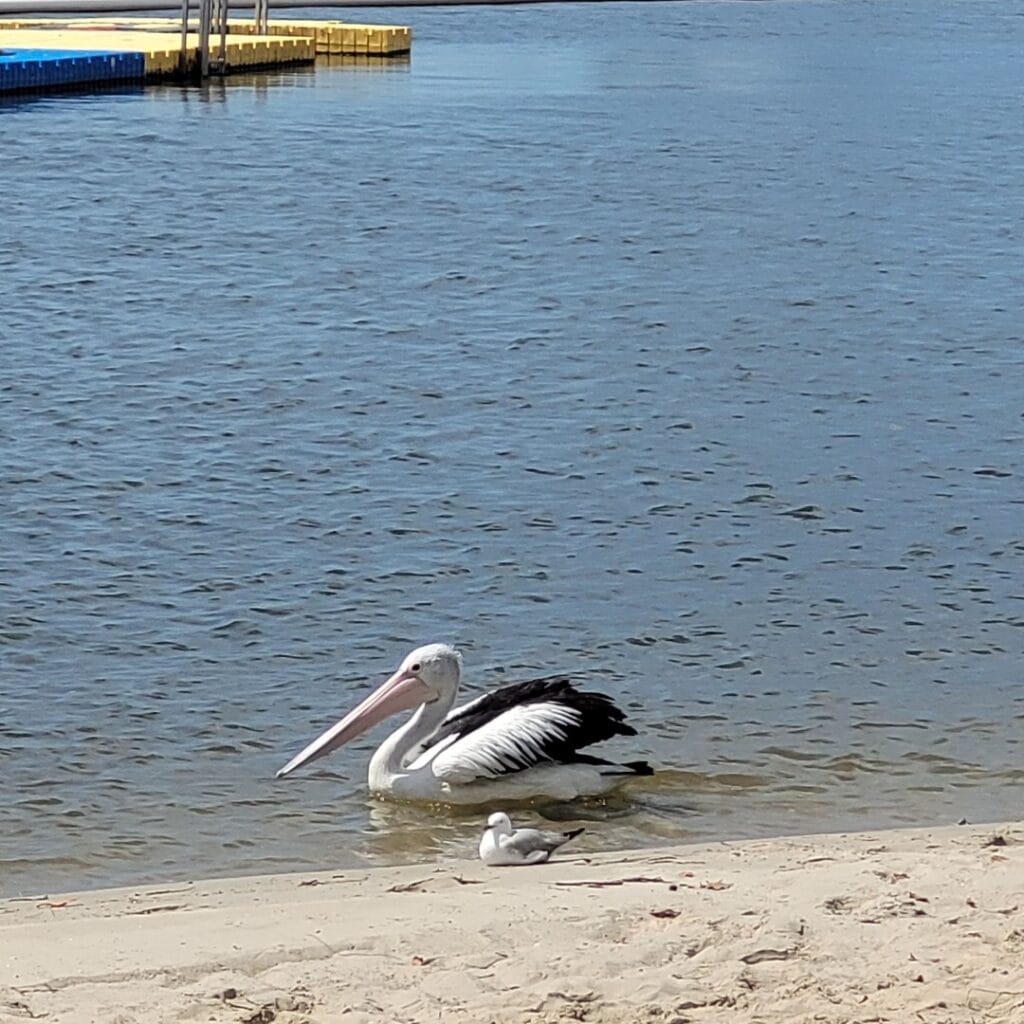
Fun fact: The bill of the Australian Pelican is the largest of all birds, measuring 40-50 cm!
2. Common Myna
Ah, what do we have here? A brown bird struts into view, its black head sharply framed by a bright yellow bill. The bare skin around its eyes gives it a faintly reptilian look — curious, alert, a little intense. A quick flip through your Australian bird guide reveals the name: the Common Myna, a feisty member of the starling family.
This one shows no hesitation around you. Mynas are city survivors, perfectly comfortable weaving through crowds, scavenging near cafés, and nesting in whatever crevice or utility pole they can claim. Bold, vocal, and occasionally aggressive, they’ve carved out a thriving niche in the urban world.
Even in this slightly grainy shot, you can see that fierce gleam in their eyes — the unmistakable look of a bird already plotting its next move. Watch out.
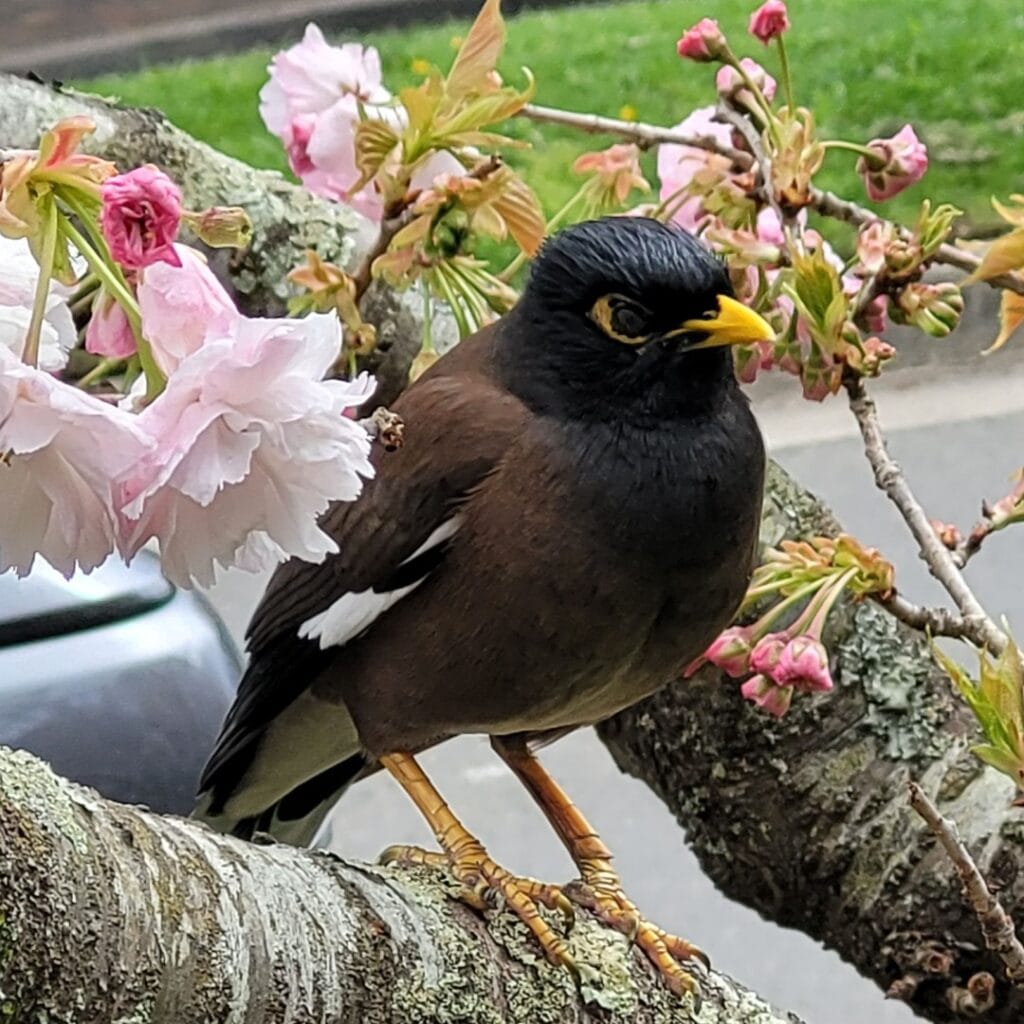
Fun fact: At an Australian train station, some Common Mynas learned to snatch food scraps from arriving trains before the doors close.
3. Laughing Kookaburra
The Laughing Kookaburra distinguishes itself as the largest of the kingfisher species. As you roam through Sydney, you’re suddenly startled by a raucous burst of laughter. Looking up, you spot it perched atop a tree — a white‑plumed belly, brown back and wings, and those piercing black eyes fixed right on you. It stands as still as a statue before unleashing yet another cackle.
And it isn’t alone. The whole tree seems to shake with laughter. After all, the more Laughing Kookaburras there are, the merrier the mirth.
For a quick phone capture, this photo turned out remarkably crisp — the spiky feather details come through beautifully.
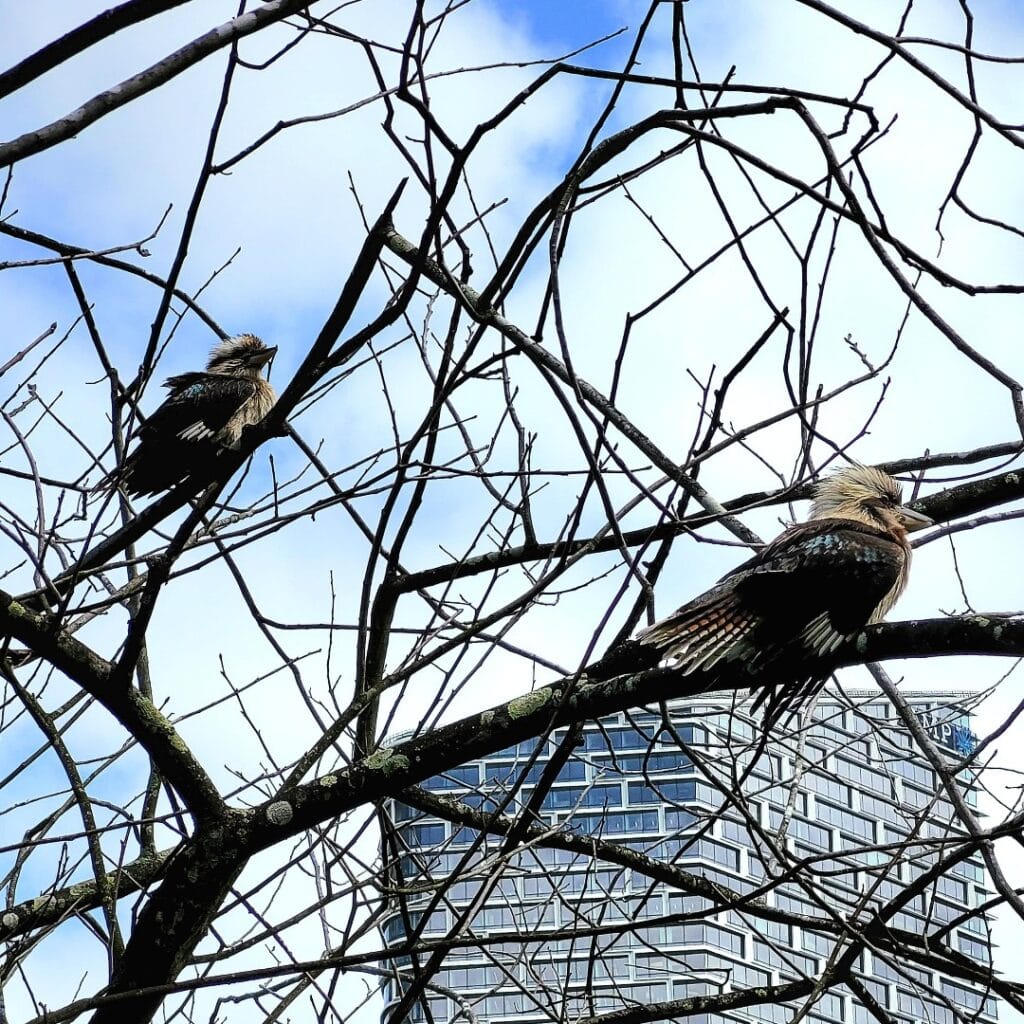
Fun fact: You have likely heard the Laughing Kookaburra’s call, for it is often used in jungle movie soundtracks.
4. Masked Lapwing
Pecking amid the grass are brown birds with bulging yellow wattles. Perhaps these are the yellow‑wattled brown birds? Close — but a quick check of your bird guide reveals their true identity: Masked Lapwings. Those yellow wattles do resemble a mask, albeit a rather warty one.
These ground‑dwelling birds wear a black crown and sport a thorny spur on each wing, like a tiny spear. They do not take kindly to intruders and may even dive at anyone foolish enough to wander too close.
Do you feel tempted to flick their wattles? I certainly did.
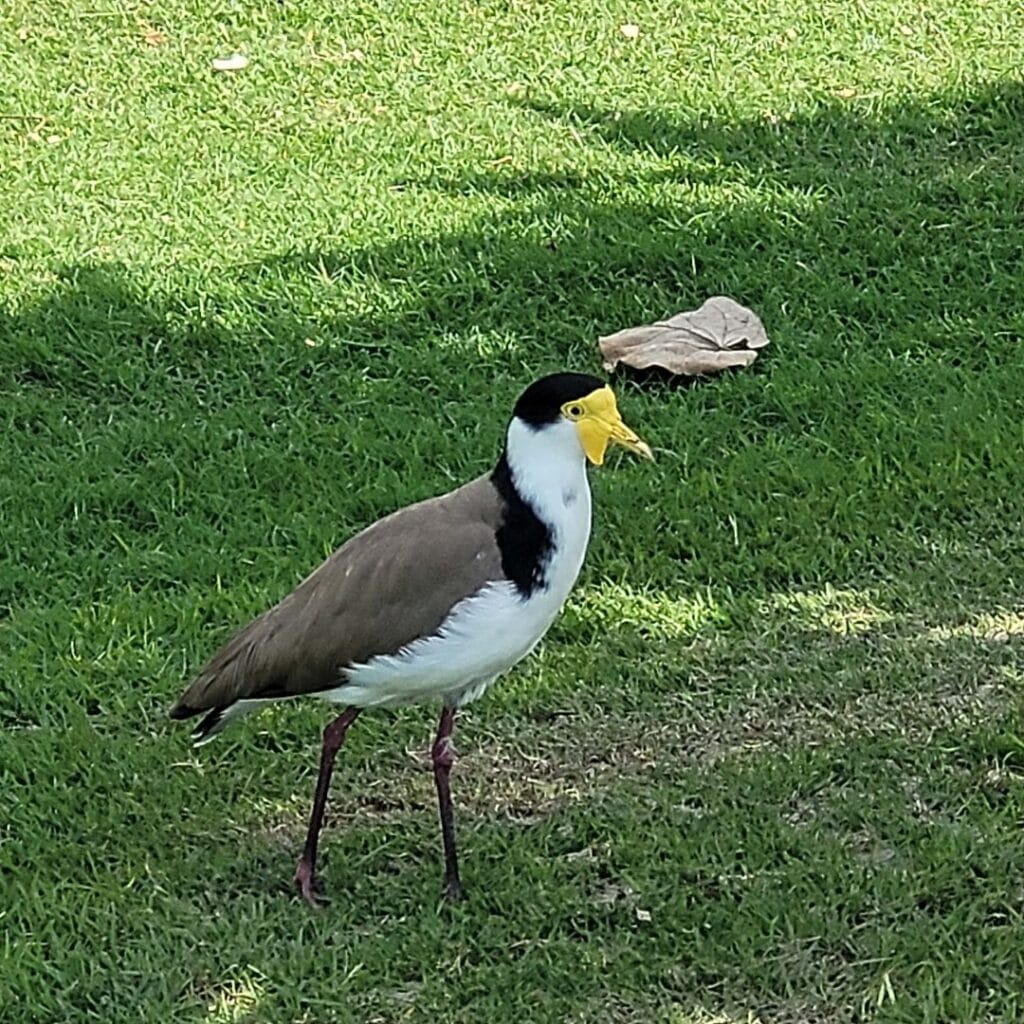
Fun fact: Masked Lapwings are homebodies and do not tend to migrate.
5. Dusky Moorhen
As you relax on a bench in the Royal Botanical Gardens, you spot a curious creature dabbling in the water. Its body and head are black, but its facial shield and bill blaze bright red, ending in a yellow tip. It almost resembles a duck at first glance.
You watch as it decides it has had enough of the water and slips onto shore to rummage along the edge. Oh dear — just look at the size of its toes! Nature’s own clown shoes. Yet it shows no embarrassment whatsoever, ambling confidently along the bank and making sure you get a full view of those wonderfully oversized, bumpy feet.
Here, you can see how those enormous feet blend right in with the sticks — nature’s camouflage at its finest.
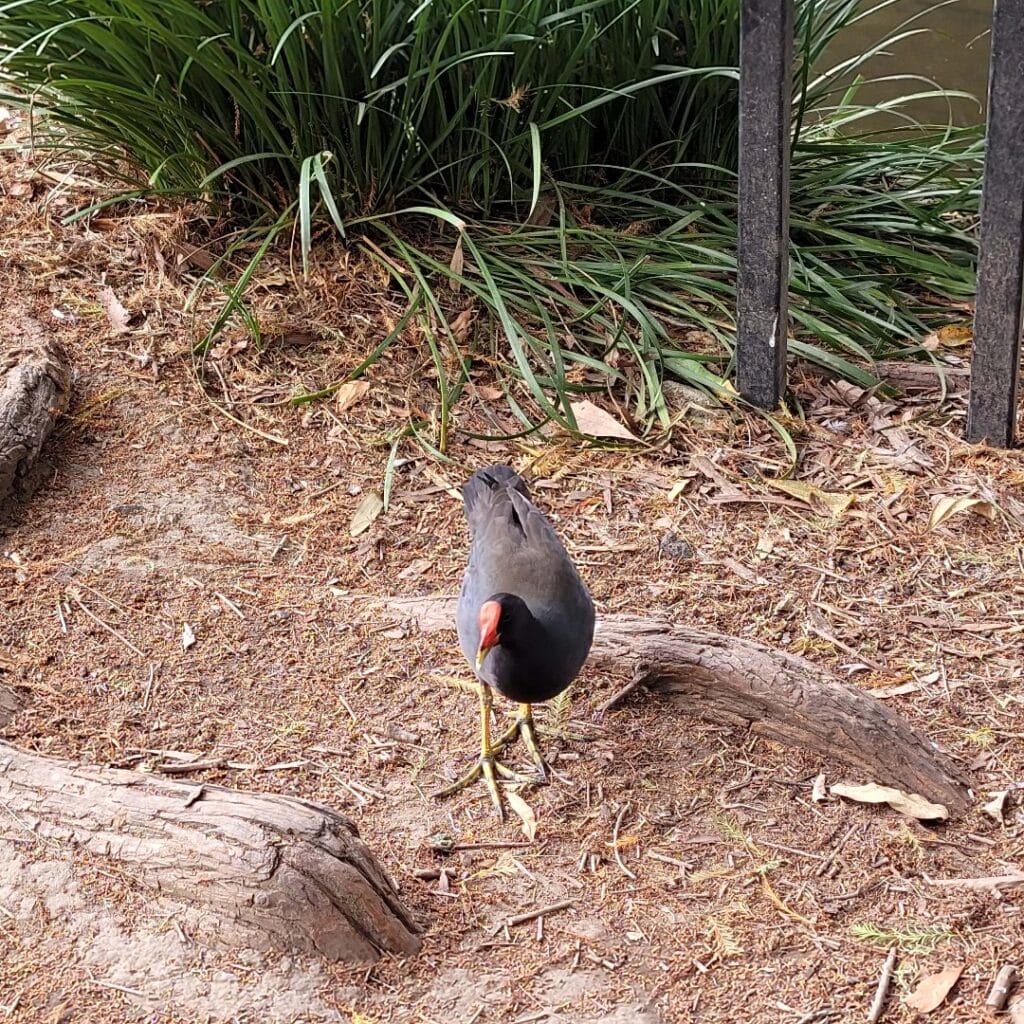
Fun fact: The Dusky Moorhen can be found in Australia, Indonesia, and New Guinea!
6. Australian Ibis
Here it is again: shaggy white coat, featherless black head, long curved bill. It cocks its head at you as you watch from afar. Who is this? Some call it a “bin chicken,” though its proper name is the Australian Ibis.
During my travels, the Australian Ibis became a regular companion, especially in the city. True to its nickname, it’s often found wherever there’s rubbish, scavenging for an easy bite. They can be a tad intimidating at first because of their size, but they’ll usually leave you alone — provided you leave their snacks alone too.
Don’t feel bad though if you’re a bit nervous about them – I certainly was – with their sword-like bills and bossy strut, they make quite the impression.
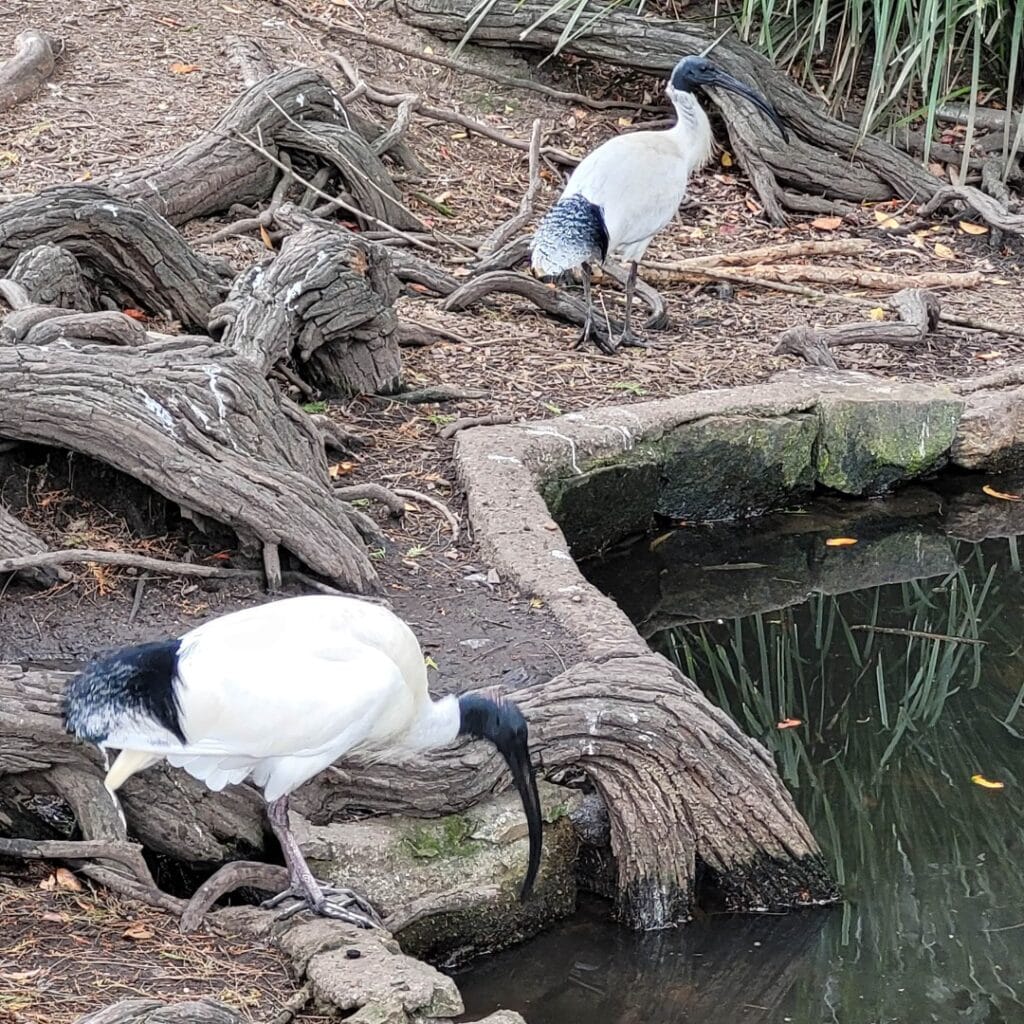
Fun fact: Though they are now a staple in big cities, they once used to be rare and only began moving in during the 1970s because of drought-driven changes in habitat.
Final Remarks
Here was a sneak peek at six common birds of Australia. As you venture out yourself, be mindful of the principles of Leave No Trace. Plan ahead, be considerate of others, and watch where you step, for you wouldn’t want to ruffle any feathers. Lastly, while photos do serve as meaningful keepsakes, you will only fully experience the moment when you set aside the camera and enjoy the experience without distraction, particularly when you are meeting the quirky, charismatic birds of Australia.
I hope you enjoy, and I look forward to sharing more unofficial wonders with you. Until next time, keep your eyes skyward and your snacks guarded. Happy birding!
Thank you for journeying with me.
More wild, wacky, and unofficial wonders await — come along for the next one!
Leave a Reply